04 · Expertise
Frameless glazing
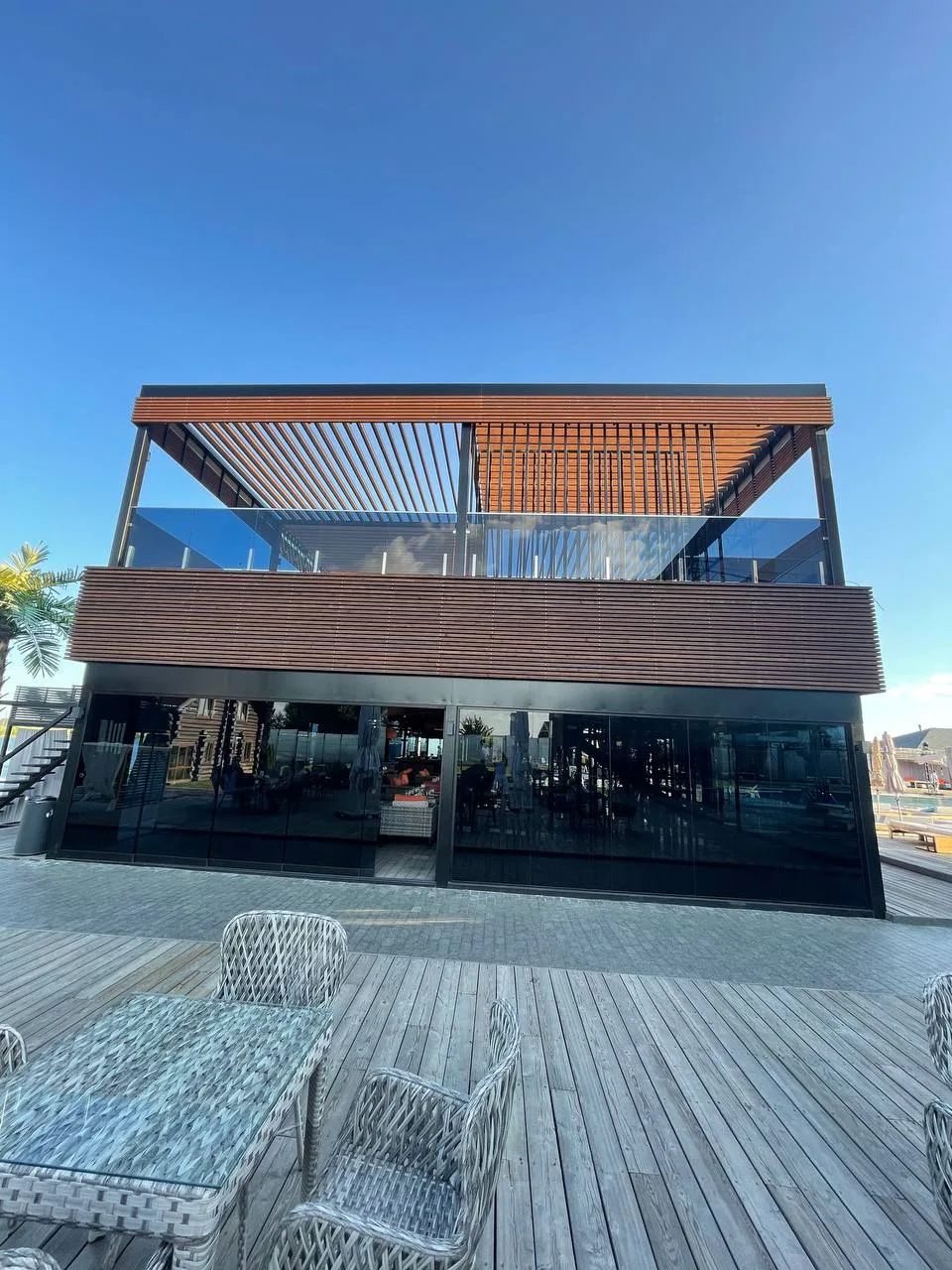
Frameless glazing protects a terrace from wind and rain while keeping the view. It is not a warm window, and most disappointment with it comes from expecting it to be one.
Be honest about what it does
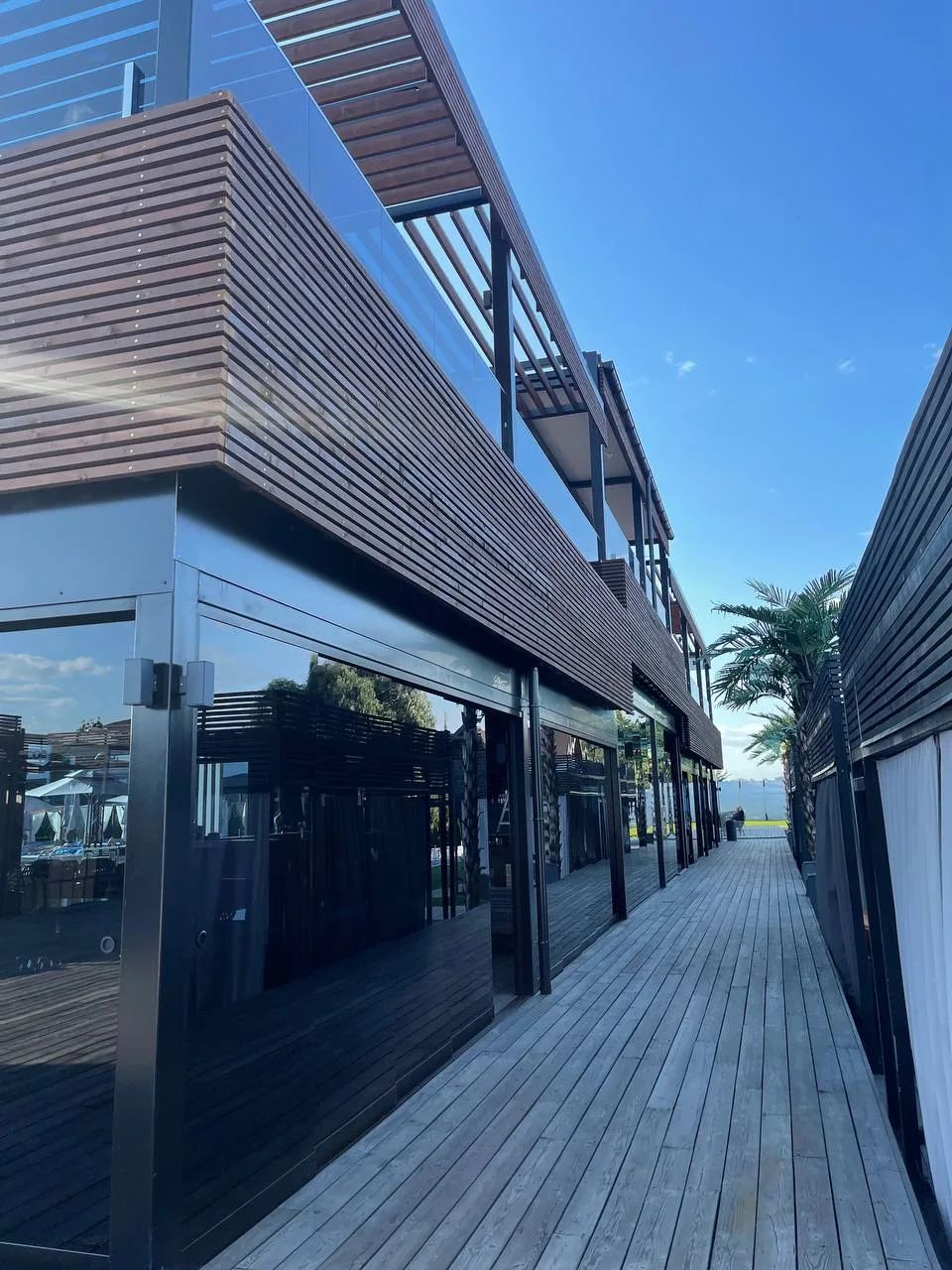
Panels meet glass to glass, with small technical gaps or thin seals. The system stops wind, rain and dust and extends the season of a terrace by months. It does not provide the thermal insulation of a double-glazed unit. Saying this at the first meeting saves everyone a difficult conversation in November.
The track and what carries it
All panels travel on a top or bottom track, and that track has to be straight and rigid along its entire length. On a terrace this usually means a steel or aluminium beam, a pergola or a slab edge that was designed to take the load and the deflection. If the supporting structure moves, the panels stop sliding — no adjustment of rollers will fix a beam that bends.
Water and wind
A bottom track on an open terrace collects water. It needs drainage and a floor fall that leads water out, not in. On upper floors and near the sea, wind load determines glass thickness and panel width more than appearance does.
What to check before production
- That the client expects weather protection, not thermal insulation
- Straightness and stiffness of the structure that carries the track
- Floor fall and drainage at the bottom track
- Wind exposure: height, orientation, distance from open water
- Where the panels are parked when the terrace is fully open